SEO, Content and Social Media: Building a Long-Term Growth System
Learn how SEO, helpful content and social media can work together to build long-term visibility, trust and repeat enquiries for a growing business.
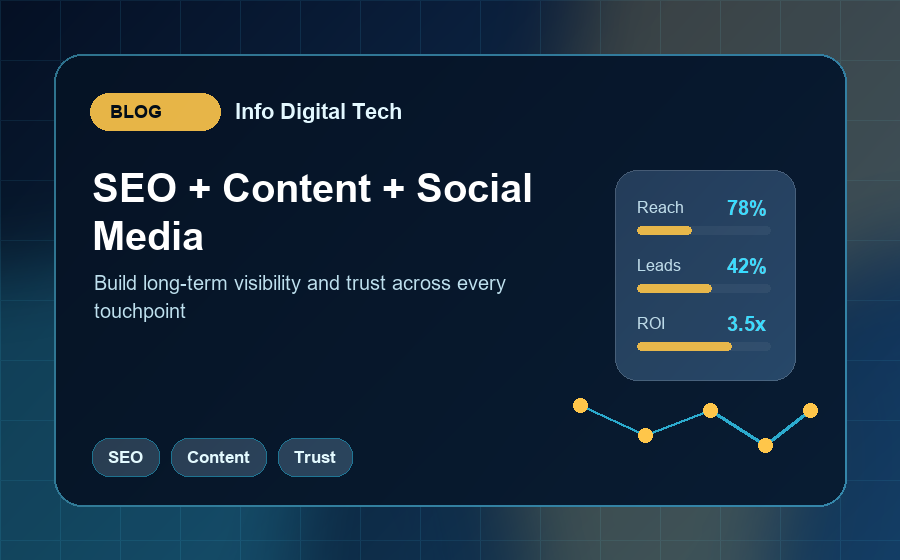
Paid ads can bring quick traffic, but long-term digital growth comes from visibility and trust. SEO, content marketing and social media create that foundation. When used together, they make a business easier to discover, easier to understand and easier to trust before a customer speaks to the sales team.
SEO begins with understanding what customers search for. A business should identify service keywords, city-based keywords, comparison searches, problem-based searches and FAQ-style searches. These keywords should guide website pages, blog topics, headings, meta titles and internal links. The goal is not to stuff keywords but to answer real customer questions better than competitors.
Content turns expertise into searchable assets. A service page explains what the business offers, while blogs and guides explain how customers should think about the problem. For example, a digital marketing agency can publish guides on Google Ads budgets, SEO timelines, social media content calendars, landing-page mistakes and lead tracking. These topics attract people who are researching and help the business appear knowledgeable.
Social media distributes the same expertise in a faster format. One detailed blog can become multiple Instagram posts, reels, carousels, LinkedIn posts, WhatsApp status updates and short educational videos. This saves content effort and keeps messaging consistent. Instead of inventing new ideas daily, the business can build a content engine from its core service knowledge.
Trust signals should be repeated everywhere. Reviews, case studies, client photos, project screenshots, certifications, process explanations and measurable results should appear on the website, blogs and social platforms. Customers rarely decide from one post. They build confidence after seeing repeated proof across different touchpoints.
Technical SEO supports the system behind the scenes. The website should load quickly, work well on mobile, use clean URLs, include optimized images, have schema markup, use correct heading structure and avoid broken links. Even great content can underperform if the website is slow or difficult for search engines to crawl.
Internal linking helps customers and Google. A blog about Meta Ads should link to the Meta Ads service page. A blog about website conversion should link to website development and landing-page services. A service page should link to related FAQs and case studies. This structure improves navigation and helps search engines understand the relationship between pages.
Measurement keeps the system improving. Track which pages get impressions, which blogs bring traffic, which posts generate saves or enquiries and which keywords are moving upward. Update old content with better examples, new FAQs, fresh images and stronger calls-to-action. SEO and content are not one-time tasks; they compound when maintained.
A strong long-term growth system does not depend on one viral post or one ad campaign. It combines SEO for discovery, content for education and social media for trust-building. Over time, this creates a brand presence that keeps attracting prospects even before paid campaigns begin.